
Hazardous Area Cable Systems
ATEX and IECEx certified cables for Zone 1 and Zone 2 classified environments. Our offshore-grade cables feature mud-resistant, UV-stabilised polyurethane jackets tested to 20,000 hours of accelerated UV exposure per ASTM G154.
Product range includes flame-retardant instrumentation cables (IEC 60092), power cables with galvanised steel wire armour, and fibre optic cables rated for marine deck exposure.
Request Oil & Gas Cable Spec
High-Density Cable Infrastructure
Our LSZH (Low Smoke Zero Halogen) cables meet EN 50575 CPR Euroclass B2ca-s1,d1,a1 — the highest practical fire classification for data center environments. Optimised outer diameters and flexible construction facilitate high-density cable tray routing.
The range includes armoured and unarmoured power cables (0.6/1 kV), screened data cables, and dedicated UPS feeder cables with reduced voltage drop characteristics.
Request Data Center Cable Spec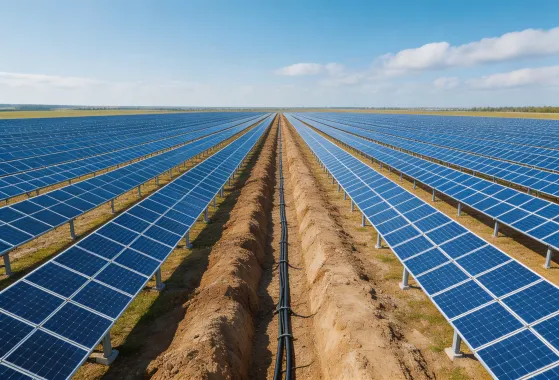
Wind & Solar Cable Systems
33 kV XLPE collection cables for wind farm inter-array networks, designed for direct burial with longitudinal water blocking. Solar-rated DC cables (TUV 2PfG 1169) with enhanced UV resistance and 1500 VDC operating voltage.
All renewable energy cables are designed for 25+ year operational life, matching the expected service window of modern wind turbine and photovoltaic installations.
Request Renewable Energy Cable Spec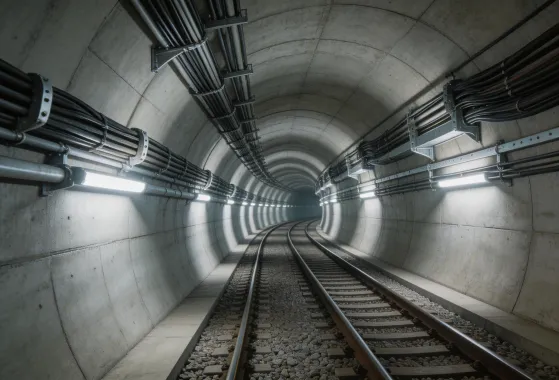
Rolling Stock & Infrastructure Cables
EN 45545-2 compliant cables with HL3 hazard level rating for the most stringent rail fire safety requirements. Available in halogen-free compounds with smoke density index (SDI) below 150.
Our rail cable range covers traction power, signalling, communications, and tunnel lighting applications. All products carry third-party certification from notified bodies including DEKRA and TUV.
Request Rail Cable Spec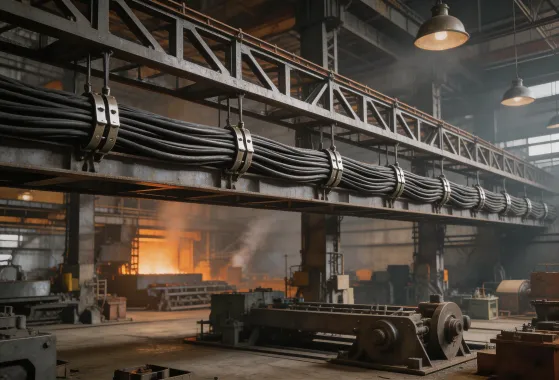
Plant-Wide Power Distribution Cables
Oil-resistant, mechanically reinforced cables for motor feeds up to 630A and plant backbone distribution. Steel wire armoured (SWA) and aluminium wire armoured (AWA) constructions available for direct burial and tray installation.
Our heavy industry range includes variable speed drive (VSD) cables with symmetrical screen designs to minimise EMI and reduce bearing damage in motor applications.
Request Industrial Cable Spec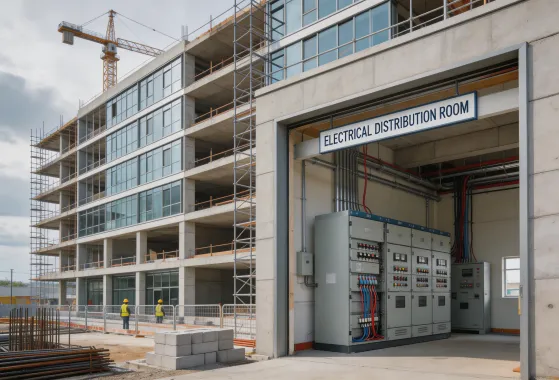
Building Cable Infrastructure
CPR-compliant cables for high-rise buildings, hospitals, and public infrastructure. Our building wire range carries Euroclass Cca or better ratings with full declarations of performance (DoP) for construction product compliance.
BIM-ready cable data packages (Revit families) are available for all standard products, enabling seamless integration into building information modelling workflows.
Request Building Cable Spec